In the series Tokyo Night: Tales Neon Serenity with Pandasan, Hiro Ando brings his iconic character Pandasan into the heart of a vibrant nocturnal Tokyo, transformed into a Neo-Pop stage where artificial light becomes emotional substance. Streets saturated with neon signs, urban reflections, and human flows compose a landscape where modernity and dreamlike atmospheres constantly overlap. Pandasan, both tender and subtly melancholic, acts as a silent guide within this intense visual energy. His presence deliberately contrasts with the commercial and technological density of the city, introducing an emotional dimension into an environment dominated by speed and consumption. The recurring flowers and clouds, visual signatures of Ando, float above the architecture like poetic breaths within urban chaos. They symbolize the persistence of nature and emotion in a world ruled by concrete and luminous screens. Through these compositions, Ando explores the tension between visual enchantment and contemporary solitude, a phenomenon omnipresent in today’s global metropolises. Tokyo appears simultaneously as a visual paradise and an emotional labyrinth where individuals search for their place. Pandasan becomes a double of the viewer, a fragile observer facing the hypnotic power of the city. Japanese pop culture, advertising imagery, and manga aesthetics merge here with an almost documentary observation of urban life. Ando reveals how contemporary society transforms the city into a permanent spectacle, where night no longer signifies rest but continuous illumination. The canvases also reveal humanity’s enduring need to seek tenderness and poetry within overwhelming modernity. Ando’s Neo-Pop language blends childhood nostalgia with an implicit critique of visual saturation. Each scene functions as a suspended moment between collective agitation and intimate solitude. Psychologically, Ando seems to project into Pandasan a sense of vulnerability toward a world accelerating without pause. The character’s softness acts as symbolic protection against urban harshness. For collectors, this series marks a key moment where Ando’s sculptural iconography fully dialogues with his painted vision of Tokyo. These works capture an era in which pop culture, urban identity, and personal imagination converge. The series demonstrates Ando’s artistic maturity, transforming a real city into a universal emotional territory. Tokyo Night ultimately becomes a luminous ode to the fragile coexistence of dream and reality within the contemporary megacity.

Neon Crossing: Twin Pandasan in Tokyo’s Sleepless
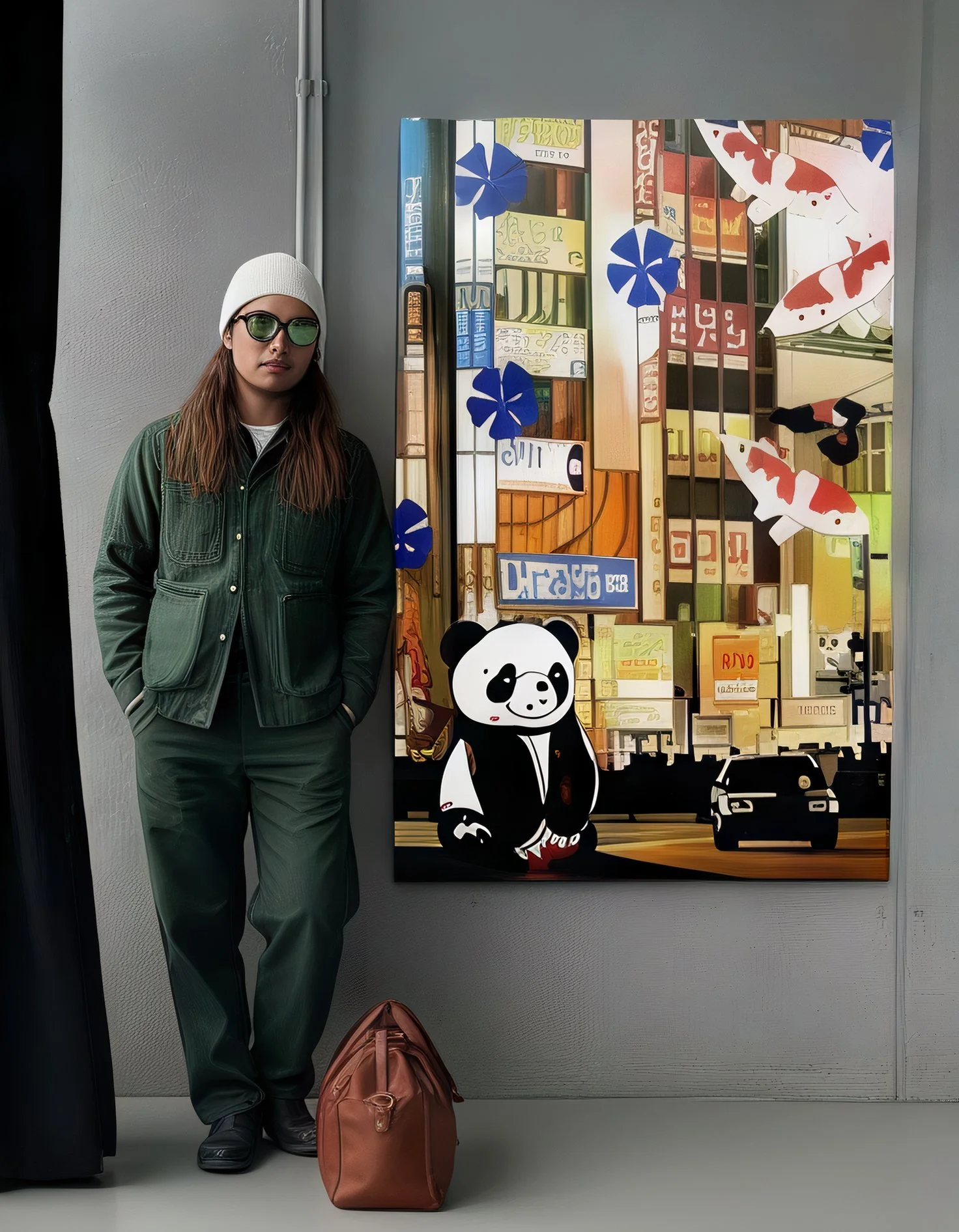
No Loan Twilight : Pandasan's Luminescent Reverie

Hachioji's Nocturnal Whispers : Journey to the Sublime
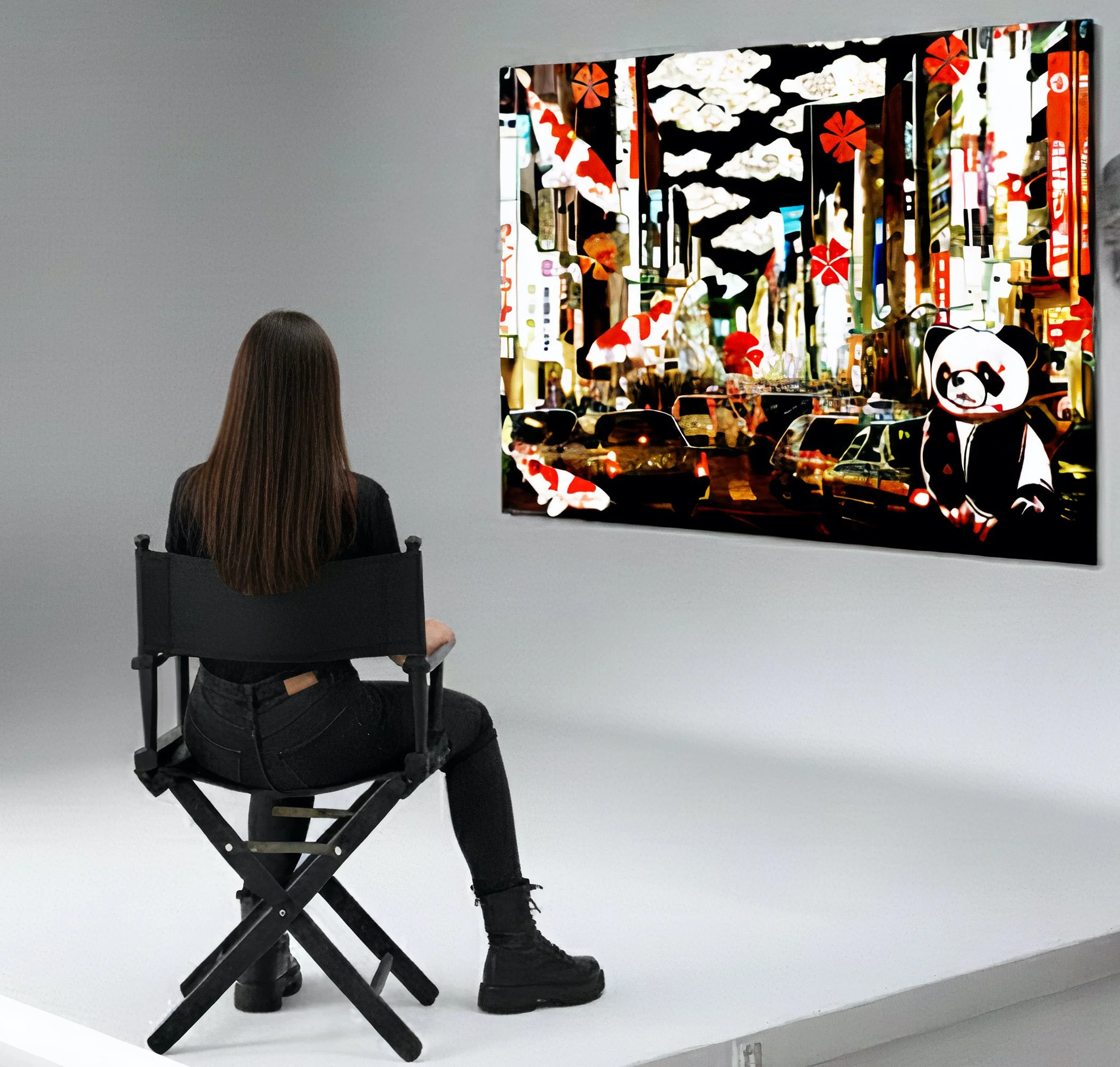
Ola Night Magic : Pandasan's Tokyo Serenade