Silent Steel Symphony : The Saga of School Girls in Battle
With Silent Steel Symphony : The Saga of School Girls in Battle, Hiro Ando opens one of the most introspective and psychologically charged chapters of his oeuvre, expanding a cycle initiated years earlier with Yuki U, Haruka T, Chisato M, and Satomi N, and now deepened through the introduction of Mitsuko S and Takako C. Founder of the Crazynoodles studio and a leading figure of the Nippon Neo-Pop movement, Ando shifts here from his iconic symbolic creatures toward the fragile territory of the human figure. These sculptures no longer function as pop icons but as emotional archetypes of youth confronted with extreme violence and social pressure. Each character embodies a different psychological response to imposed chaos: endurance, solitude, moral conflict, or fractured innocence. With Mitsuko S, the narrative evolves toward predation and the conscious embrace of power, while Takako C represents restraint and calculated survival Together, the six figures form a silent emotional spectrum where victimhood, resistance, domination, and strategic withdrawal coexist. The choice of polished stainless steel is central: reflective, cold, and impenetrable, it becomes a metaphor for emotional armor in contemporary society. The viewer sees themselves mirrored in these figures, implicating their own vulnerability within the narrative. Through these works, Ando confronts a society where youth navigates anxiety, competition, isolation, and latent violence beneath surfaces of technological progress. The sculptures translate the psychological pressure of modern life into monumental stillness. Violence is never staged as spectacle but transformed into suspended contemplation. Ando’s psychology emerges here as unusually exposed, revealing an artist questioning the cost of survival in hypermodern environments. His figures oscillate between fragility and resilience, reflecting both empathy and unease toward contemporary youth. The series thus departs from heroic narratives and instead explores moral ambiguity. In this steel symphony, innocence is neither protected nor entirely lost—it is negotiated. The monumental material contrasts with the vulnerability of the young protagonists, intensifying emotional tension. Silent Steel Symphony becomes a meditation on choice, fate, and adaptation. It marks a mature evolution in Ando’s practice, where pop culture references are transformed into universal allegory. Through these silent figures, Hiro Ando creates a body of work in which youth, confronted with the unacceptable, continues nonetheless to search for its own path.

Takako C - Elegy of Steel : The Sniper’s Stillness
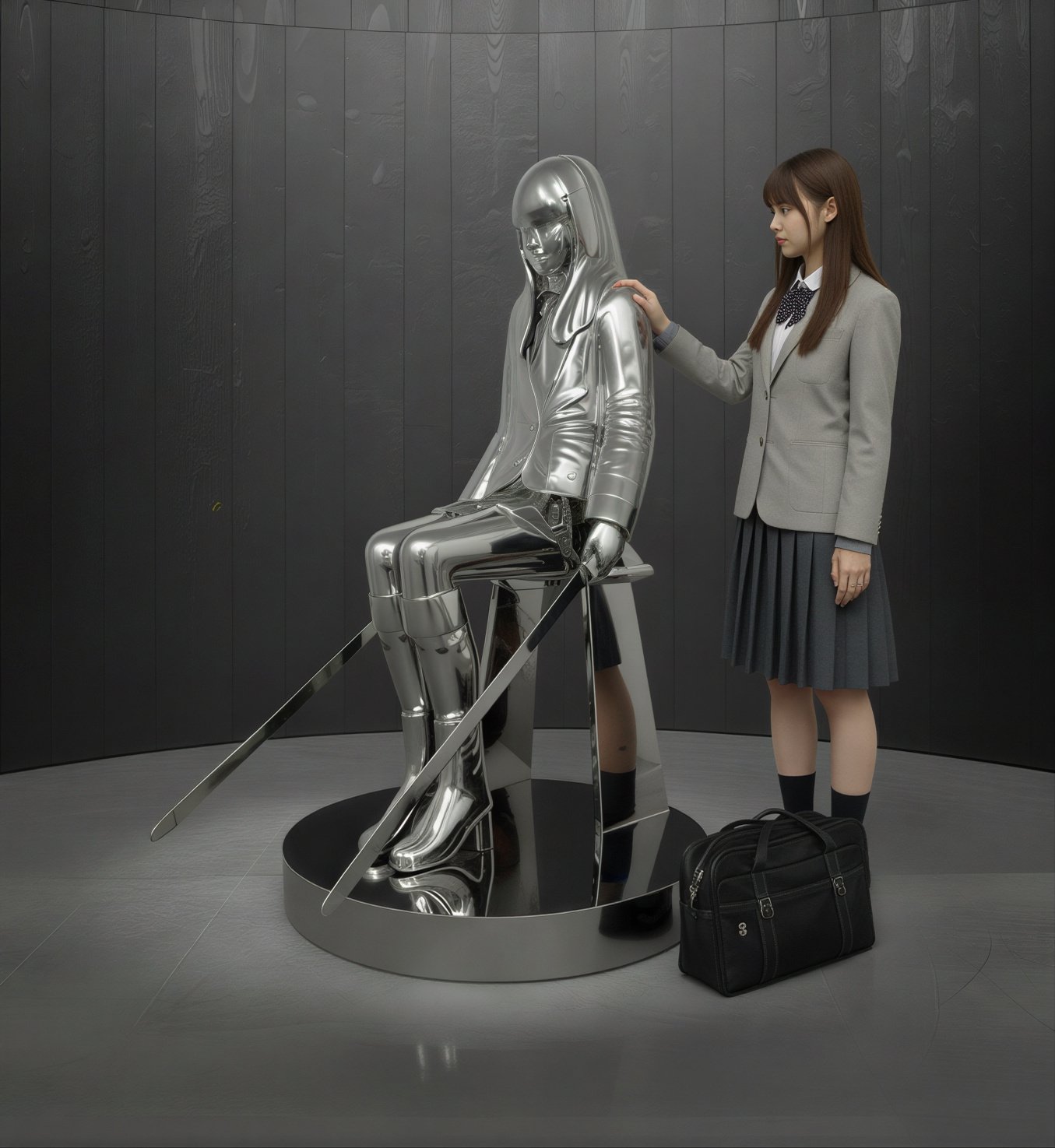
Mitsuko S - Rapture of Steel : The Predator’s Grace